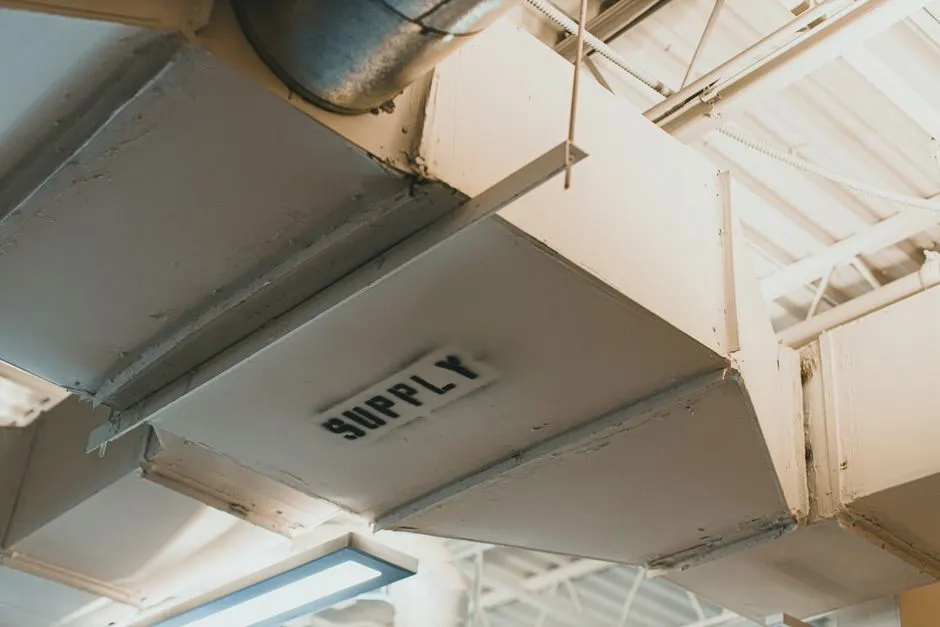
Yes - air duct sanitizing kills mold spores and bacteria on duct surfaces, and it works when it is done after a full mechanical cleaning and after the moisture source that fed the growth is fixed. Sanitizing alone, sprayed into dirty ducts, does not work. It knocks down surface counts for a few weeks, then the colony regrows on the same dust and biofilm that was there before.
Air duct sanitizing for mold and bacteria in Ewing, New Jersey is a two-step job: clean first, then treat. Below we break down what the process actually does, what it costs in 2026, how fogging compares to UV lights, and the mistakes that make homeowners think sanitizing is a scam.
Does air duct sanitizing really work for mold and bacteria in Ewing, New Jersey?
Air duct sanitizing works on contact - the EPA-registered solution we use kills mold spores, mildew, and common bacteria on the surfaces it reaches, and the effect lasts as long as those surfaces stay dry. It does not work as a standalone fix, because sanitizer cannot penetrate a half-inch of dust, and it cannot kill mold whose water source is still active.
Think of it the way you would think about a bathroom ceiling. Bleach kills the black spots on the surface. If the exhaust fan is broken and the shower runs hot twice a day, the spots come back in three weeks. Ducts are the same. Kill the growth, then remove what feeds it - dust, humidity, and in Ewing's older housing stock, the return leaks that pull damp basement air into the system.
When we run a proper job - HEPA-vacuum the trunk and branches, rotary-brush the supply runs, then fog the whole system - the treated surfaces stay clean for 12 to 24 months in a normal Ewing home. That is the honest number. Anyone promising permanent mold elimination is selling you something.
Why mold and bacteria grow inside Ewing ductwork
Mold needs three things inside a duct: organic dust, moisture above roughly 60% relative humidity, and still air. Ewing homes supply all three more often than you would think.
- Basement and crawlspace returns. A lot of the housing around Air duct Cleaning in West Trenton was built before 1960 with return ducts run through damp below-grade space. Every time the air handler kicks on, it pulls that humid air through the system.
- Oversized AC and short cycles. A unit that cools the house in eight minutes never runs long enough to pull humidity out of the air. Duct interiors stay at 65-75% RH all summer.
- Leaky returns in attics. A 10% return leak in a 100°F attic pulls hot, humid air straight into the duct. That is a mold farm.
- Post-renovation dust. Drywall dust is food. If you finished a basement or gutted a kitchen and never cleaned the ducts, the organic load is already there.
You will usually smell it before you see it - a musty, wet-cardboard odor that gets stronger when the heat first comes on in October. That is the classic signal we get called about this time of year.
What sanitizing actually kills - and what it does not
Sanitizing kills surface mold spores, mildew, and the common bacteria that colonize duct liners - Stachybotrys, Aspergillus/Penicillium, and Cladosporium are the three we see most in lab reports from this region. It does not remove the dead spores, the dust they were growing on, or the moisture that started the problem.
Here is the practical split:
- Kills: active mold growth on metal, flex duct liner, and fiberglass board; surface bacteria; mildew odor.
- Does not kill: mold inside wall cavities, mold behind a wet coil, mold under a leaking pan, or spores already settled in carpet and furniture.
- Does not remove: dust, debris, dead spores, or construction grit. That is what the mechanical cleaning is for.
This is why we never quote sanitizing on its own. If a customer calls asking for a fogging-only service, we explain the sequence and let them decide. About nine out of ten go with the full clean-and-treat, because a fogging alone is money spent on a problem that comes back.
If you have visible growth on the registers or a confirmed lab result, the right first step is mold in air ducts cleaning in Ewing, New Jersey - physical removal of the growth - and sanitizing is the follow-up step that keeps it from returning.
Fogging, UV lights, and ozone: how the three methods compare
Fogging is the method that actually sanitizes a duct system. A ULV fogger pushes an EPA-registered solution through the trunk and branches as a fine mist, coating every surface the air touches. It takes 20-40 minutes on a typical Ewing colonial and reaches areas a spray bottle never will.
UV light duct sanitizing in Ewing, New Jersey
A UV-C lamp mounted at the coil or in the return kills what passes the bulb - nothing more. It does not treat duct walls downstream, and it does nothing for mold already growing on the liner. UV is a good maintenance tool and a poor remediation tool. We install them, and we tell customers exactly that.
Ozone generators
Ozone is a strong oxidizer and it does kill mold. It is also a respiratory irritant, and it is not something you want running while a family, a dog, or a cat is in the house. We do not use ozone in occupied homes.
Fogging
Fogging with an EPA-registered, low-residue sanitizer is the standard for occupied homes. It is the method behind most of our air duct sanitizing services in Ewing, New Jersey, and it is the one we recommend when a customer asks which approach actually works.
How much does air duct sanitizing for mold and bacteria cost in Ewing?
Typical 2026 pricing in this area runs $150 to $350 for sanitizing as an add-on to a full duct cleaning, and $450 to $900 for a standalone mold-focused job that includes cleaning, sanitizing, and a moisture check. Whole-house duct cleaning on its own usually lands between $400 and $800 depending on the number of vents and how much flex duct is involved.
What moves the number:
- Number of supply and return runs. A 1,600 sq ft ranch with 10 vents is a different job than a 3,200 sq ft two-story with 22.
- Access. Ducts buried behind finished basement ceilings add labor.
- Severity. Light musty odor is a fog-and-go. Visible growth on multiple registers means a longer clean before any sanitizer goes in.
- Add-ons. A UV lamp install is usually $250-$500 on top of the cleaning.
Be skeptical of a $99 whole-house special. That price covers a vacuum at the main trunk and nothing else. If a company will not put the scope in writing - number of vents, method, sanitizer used - the number is meaningless.
If you want to compare what a full job looks like before you commit, our local Airduct cleaning in Ewing, New Jersey page walks through the standard scope we run on every home.
Is duct sanitizing safe for pets and children in Ewing NJ?
Yes, when the sanitizer is EPA-registered for occupied spaces and the technician follows the dwell time on the label. We use products rated for residential HVAC use, and we keep kids, pets, and anyone with asthma or COPD out of the treated rooms for the 2-4 hours it takes the fog to settle and the system to flush.
Three things to ask any company before they fog your ducts:
- What is the EPA registration number on the sanitizer?
- Is it labeled for occupied spaces, or only for unoccupied structures?
- How long do we need to stay out, and how do you flush the system after?
If the answer to any of those is vague, do not let them spray. Ozone and some quaternary ammonium products are fine in an empty commercial building and a bad idea in a house with a toddler and a cat. We use the low-residue option by default on residential jobs, and we will show you the label on request.
How often should you sanitize your air ducts in Ewing?
Sanitize when there is a reason to - not on a calendar. For most Ewing homes that means once every 3 to 5 years as part of a normal duct cleaning, or immediately after any event that introduces moisture or organic debris into the system.
Sanitize now if any of these are true:
- You just finished a renovation, a basement finish, or a roof repair.
- You had a water event - a burst pipe, a sump failure, a leaking AC pan.
- You smell musty air when the heat first comes on in fall.
- Someone in the house has new or worsening allergy or asthma symptoms.
- You bought the house and do not know the duct history.
If you have pets, add a air duct cleaning for pet hair in Ewing, New Jersey pass to the schedule every 2 to 3 years. Pet dander and hair are the organic base layer that mold grows on, and they build up faster than most people expect.
Common mistakes we see on sanitizing jobs
The single biggest mistake is sanitizing before cleaning. We get called to redo jobs where a previous company fogged dirty ducts, charged $300, and left the homeowner with the same musty smell six weeks later.
Other things to watch for:
- No moisture fix. If the return is pulling from a wet crawlspace, sanitizing is a temporary patch. Seal or reroute the return, or you will be back here next year.
- Spraying only the registers. Fogging the vents you can see does nothing for the trunk line where the growth actually lives.
- Using ozone in an occupied home. It works, and it is the wrong tool for a family house.
- Skipping the air handler. The blower wheel, the coil, and the drain pan are where the worst growth usually is. If the tech does not open the unit, the job is incomplete.
- No post-job verification. A moisture reading and a visual on the coil before and after should be part of the report.
When to call a professional
Call us when you can smell mold, when you can see growth on a register or inside the air handler, or when a home inspection flagged microbial growth in the HVAC system. Those are not DIY jobs - a shop vac and a bottle of bleach will spread spores through the house, not remove them.
Firm Flash handles the full sequence: camera inspection, mechanical cleaning, sanitizing, and a moisture check on the air handler before we leave. If the growth traces back to a return leak or a wet crawlspace, we tell you that on the same visit so you can get it fixed instead of paying us to come back every spring.
We work across Ewing Township and the surrounding neighborhoods, from the older colonials near the Air duct Cleaning in Pennington Road Corridor to newer construction on the west side. Same scope, same pricing, whether it is a 900 sq ft apartment or a 3,000 sq ft house.
Frequently Asked Questions
Does air duct sanitizing really work for mold in Ewing, New Jersey?
Yes, if it follows a full mechanical cleaning and the moisture source is fixed. Sanitizing kills surface mold and bacteria on contact and holds for 12-24 months in a dry system. Fogging dirty ducts without cleaning first does not work - the growth returns within weeks.
How much does air duct sanitizing for mold and bacteria cost in Ewing?
In 2026, expect $150-$350 as an add-on to a full duct cleaning, or $450-$900 for a standalone mold-focused job that includes cleaning, sanitizing, and a moisture check. Price depends on vent count, access, and how severe the growth is.
Is duct sanitizing safe for pets and children in Ewing NJ?
Yes, when the product is EPA-registered for occupied spaces. Keep kids, pets, and anyone with asthma out of treated rooms for 2-4 hours while the fog settles and the system flushes. Ask for the EPA registration number before any company sprays.
How often should I sanitize my air ducts in Ewing, New Jersey?
Every 3-5 years as part of a normal duct cleaning, or right after a water event, a renovation, or a move into a home with unknown duct history. Pet owners should add a pet-hair cleaning pass every 2-3 years.
Will sanitizing remove the musty smell from my ducts?
It removes the biological odor source, so yes - if the smell is coming from mold or mildew in the ducts. If the odor is from a wet crawlspace or a leaking coil, sanitizing will mask it for a few weeks and then it comes back until the moisture is fixed.
Get help with Air duct Cleaning in Ewing
If your ducts smell musty, if a home inspection flagged growth, or if you just want a straight answer on whether sanitizing is worth it for your house, call us. We will inspect the system, tell you what we find, and quote the job before we start.
Call Firm Flash at (844) 803-5147 to schedule an air duct cleaning and sanitizing visit in Ewing, New Jersey.